In 2019, the Government amended the Climate Change Act 2008 by introducing a target of at least a 100% reduction of greenhouse gas emissions, compared to 1990 levels by 2050, thus creating a statutory target.
What is net zero?
Net zero is the point where there is no net impact on the climate from an organisation’s greenhouse gas (GHG) emissions. This is achieved through a combination of reducing then removing emissions. To achieve Net Zero, the UK’s total GHG emissions will need to be equal to or less than the emissions the UK removed from the environment, to achieve a level compatible with the target of limiting global warming to 1.5 degrees Celsius. This can be achieved by a combination of emissions reduction and removal.
Net zero is important to businesses of all shapes and sizes, for several reasons:
Regulatory compliance: The UK government has set targets to achieve net-zero emissions by 2050.
Reputation and client expectations: Adopting net-zero strategies can enhance a company’s reputation, attract clients, and increase market competitiveness.
Cost savings: Transitioning to low-carbon alternatives (renewable energy) and energy-efficient practices can reduce operational costs.
Supply chain requirements: Clients are setting their own net-zero targets and are likely to prioritise those companies who share their objectives.
Carbon footprint
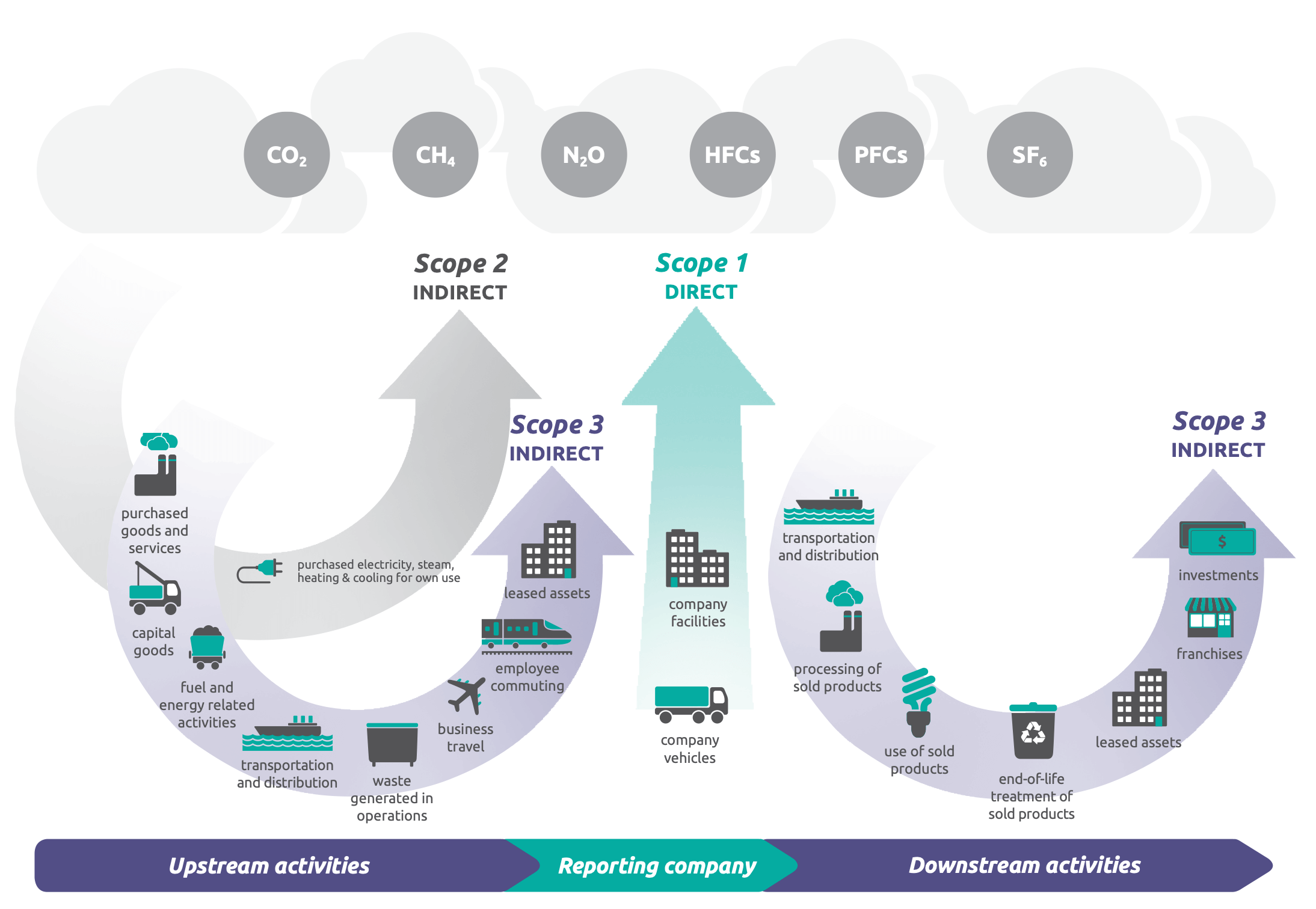
The total amount of carbon emissions (or ‘greenhouse gases’) directly and indirectly released by business’s activities, including those is supply chain. Carbon footprints are usually reported in tonnes of emissions per unit of comparison.
Emissions from the result of activities that are not owned or controlled by your business. These emissions occur upstream from the supply chain and downstream (through customer use) and typically account for most of a business’s emissions.
Emissions produced indirectly from your business activities include:
Purchased goods and services.
Business travel.
Employee commuting.
Waste disposal.
Transportation and distribution (up- and downstream).
Reducing your carbon impact
We all have a responsibility to reduce our carbon footprint and waste where possible. From individuals, to SMEs, to corporations, there are actions we can take at every level to minimise our environmental impact.
Minimise the carbon impact of processes and activities
Examining the processes and activities that make up your work can help you to minimise the carbon impact of these actions. Potential ways to reduce your carbon output on site include:
Reducing transportation emissions by sourcing local materials.
Planning the use of machinery efficiently.
Recycling and reusing material where possible.
Select suppliers and partners based on their sustainability policies
When choosing your suppliers and partners, investigate their sustainability and environmental policies and practices to reduce the environmental impact of your projects.
Choose energy efficient, electric tools and equipment.
Depending on your access to power on site, try to purchase and use rechargeable electric equipment over those that require fossil fuels to run.
Encourage greener commutes
Even a small change to your workforce’s commuting habits can make a big difference to your business’ carbon emissions.
As an employer, you can promote a greener commute by setting up Cycle to Work or by offering subsidised public transport and helping to organise car-sharing.
Reduce waste & support recycling
Increasing the amount that your workplace recycles can help to offset your carbon emissions.
Make sure that recycling stations are accessible and clearly labelled, and that instructions for where different materials should be disposed of are outlined.
The Supply Chain Sustainability School is a FREE virtual learning platform around sustainability, with the aim to upskill those working within, or aspiring to work within, the built environment sector.
The UK Business Climate Hub provides net zero advice for small and medium-sized enterprises (SMEs) in the UK, including links to free training and carbon calculators.