Why LiveWest Housing Association Reroofed Before Installing Solar
The pilot involved 11 reroofing and PV installations across an estate of 14 houses. Milestone highlighted to LiveWest the risk that installing PV on roofs nearing the end of their serviceable life can be a false economy, as the systems could need to be removed and reinstalled when the roofs required replacement. This was supported by NFRC guidance on the topic.
LiveWest manages more than 50,000 properties across the South West, from Cornwall to Gloucester. The success of the pilot could therefore provide a model for integrating solar PV into future planned roofing projects across its housing stock.
The project demonstrates why housing associations should assess roof condition before installing solar PV. Installing systems on roofs nearing the end of their serviceable life risks leaks and structural problems, as well as the additional cost and disruption of removing and reinstalling the systems when reroofing becomes necessary.
Coordinating roofing and PV installations
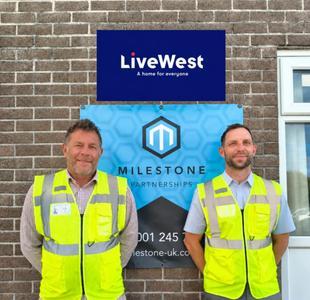
Milestone Roofing and Compliance Manager Steve Bird said:
“Milestone were pleased to work alongside LiveWest on this project, and we hope it could be the shape of things to come. We feel putting new PV installations on end-of-life roofs can be a false economy.
“I spent two years of my life mediating failures on new installations which had leaked. In the vast majority of cases, this was down to poorly fitted brackets on the rail systems. By working alongside our energy supplier and roofing teams, we were able to ensure that brackets were fitted correctly whilst maintaining the Wienerberger fixing specification for our and our clients’ sign-offs.”
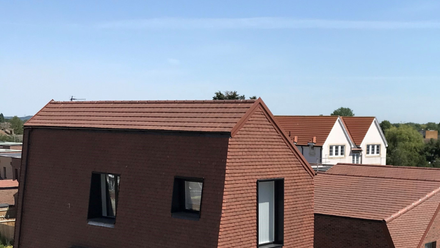
The properties had reached the end of their serviceable life from a roofing perspective. The Cornish units consisted of mansards with badly slumped cavity wall insulation behind them, which was causing a number of internal issues. The insulation was replaced as part of the works, while the installation of new PV systems also contributed to improved EPC ratings.
Steve continued:
“LiveWest carried out full asbestos and structural surveys and, with some additional timber work in the lofts, we were able to install 3.6 kWp systems.
“We also liaised with the residents and were able to site the inverters in suitable locations. As I said before, installing new PV systems on end-of-life roofs can be a false economy. If problems such as leaks occur, the cost of putting them right can potentially be £3,000 or more, with scaffolding having to be re-erected, panels removed, the leak rectified and the panels reinstated.
“This alone could outweigh the cost of the PV installation, so in our eyes it makes sense to run projects like this as part of planned roofing works.”
Working in a challenging coastal environment
Although only a small project, the scheme proved challenging due to its coastal location and the restricted access to the estate.
The site was a small estate with very limited access for materials and scaffold wagons. Milestone worked closely with SIG Plymouth to coordinate timed deliveries, as there was no suitable garden space available for storing materials.
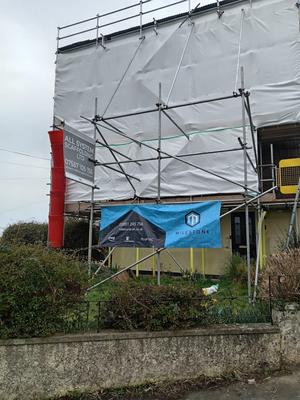
There was also a significant amount of scaffolding on site. As the project was undertaken during winter, LiveWest made the decision to install scaffold tin hats to provide additional protection from the elements.
The presence of open fires and log burners within some of the properties also had to be taken into consideration. Properties with electric fires presented fewer complications, and where appropriate, chimneys could be demolished, something Milestone undertakes on its social housing projects wherever possible.
Minimising disruption for residents
David Opie, Milestone Senior Site Manager, said:
“Although a small project, it was quite a challenging project due to the size of the estate. There was a lot of activity on site with roofers, scaffolders, deliveries and PV engineers, so we worked closely with the residents and tried to keep disruption to a bare minimum wherever possible.
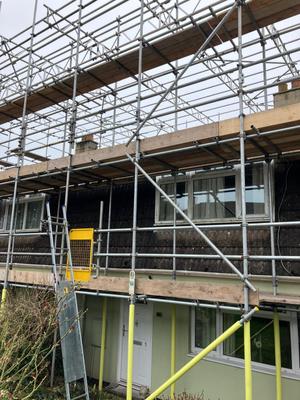
“Working during the winter months, it proved a good idea to incorporate the tin hats into the project. Being right next to the coast, we experienced some wild weather conditions.”
The project required close coordination between the various trades, suppliers and residents, with the site team carefully managing deliveries and works to minimise disruption throughout the programme.
A model for future planned works
For LiveWest, the pilot demonstrated the benefits of incorporating PV installations into planned roofing programmes rather than installing new systems on roofs approaching the end of their serviceable life.
Dan Tucker, LiveWest Asset Delivery Manager, said:
“LiveWest have a vast portfolio of properties, and we are keen to start implementing PV installations into our planned works projects rather than on end-of-life roofs.
“We were also pleased that Milestone were able to use a local workforce, which is great for social value and the local economy. Milestone explained the relevant NFRC guidance notes to us, so we are now keen to move forward with projects like this.”
The pilot demonstrates how coordinating roofing and renewable energy works can help housing providers take a more joined-up approach to planned maintenance, while also delivering improvements for residents and supporting local employment and the wider economy.
Milestone Partnerships say they look forward to building on the success of this pilot and exploring opportunities to incorporate further PV installations into future planned roofing programmes with LiveWest.