
CITB Funding Update (Training Groups & New Incentives)
From 31 March, training group funding from CITB will cease.
No further Training Group grant will be paid after this date. This decision comes amongst a raft of other changes to the way CITB distributes levy contributions and manages funding and grants.
CITB says it has had to make these changes because demand for its services and funding has outpaced the capacity of levy contributions, which have remained at the same level.
“This decision reflects changing circumstances: whilst Levy rates have remained stable, demand for our services has grown significantly. We must now support more employers with the same financial resources, which means investing in the most cost-effective approaches,” CITB said.
These changes sit alongside other cuts which came into effect at the start of the year, including cuts to a variety of short course training.
NFRC was very supportive of the continuation of training groups during consultation with CITB in previous years, so the withdrawal of funding is disappointing, especially at a time when demand for skilled workers and new entrants from industry is so high.
If you have any questions or concerns, or would like roofing specific support with recruitment during these changes, please contact NFRC’s careers service here.
Other Funding Pathways to Consider:
CITB is encouraging employers to seek support through newer models of support which they say, “are proving much more effective at reaching and engaging businesses across the industry”.
From April, the primary routes CITB is promoting for construction SMEs are Employer Networks and the New Entrant Support team.
Employer Networks have funding available at 50% match funding or at a fixed contribution for health and safety courses.
In an attempt to ensure funding goes far enough, CITB have capped funding available through Employer Networks per year based on company size:
- Micro employers (1–9 employees): cap of £1,500
- Small employers (10–49 employees): cap of £2,000
- Medium employers (50–249 employees): cap of £4,500
Employers can contact CITB’s New Entrant Support Team by calling 0300 4566431 or emailing [email protected]
Large employers (250+ employees) will no longer be able to access Employer Networks, and will instead turn to a ‘Large Employer Fund’ which will provide up to £18,000 a year to spend on in-scope training.
Employers can still access a range of other CITB financial support options, including:
- Some Short Course Grants (including plant, scaffolding, and other exempt standards)
- Apprenticeship Grants
- Travel to Train support
- Qualification Grants
- Industry Impact Fund
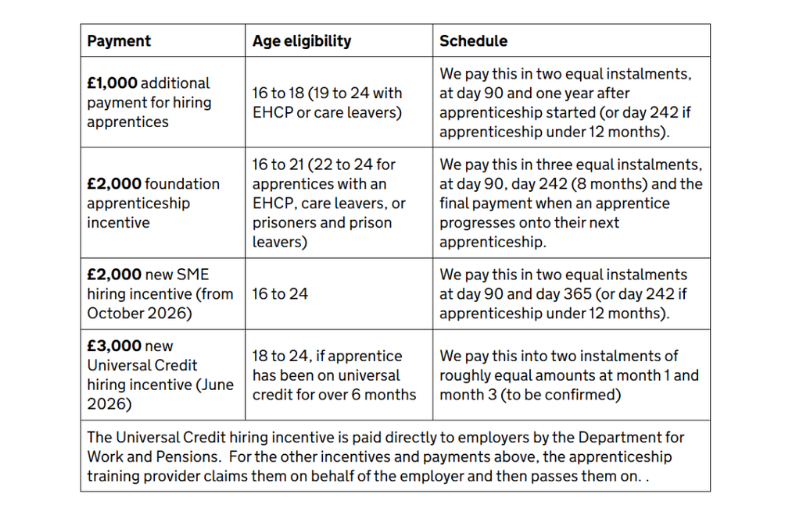
There is also a series of new benefits becoming available throughout this year for employers who take on young people, as part of the government’s ‘Youth Guarantee’ drive.
Youth Jobs Grant: From June 2026, all businesses will receive £3,000 for each young person that they hire aged 18 to 24 who has been on Universal Credit and looking for work for at least six months.
Apprenticeship Incentive: From October 2026, SMEs will receive £2,000 for each new apprentice aged 16 to 24 that they take on, and this incentive will be able to be combined with the Youth Jobs Grant.
Expansion of the Jobs Guarantee: The existing Jobs Guarantee scheme, offering a fully subsidised six‐month paid job, will now be available to all 18 to 24 year olds who are on Universal Credit and have been looking for work for at least 18 months.
NFRC’s Response:
NFRC has been clear in its criticism of the uncertainty created by CITB's recent actions.
While we welcome the new funding streams, the lack of adequate notice before some changes were announced is unacceptable, and uncertainty remains about whether new options will fill the gaps left by training groups. Businesses need visibility of both their work pipelines and their funding pipelines if they are to invest in their future with confidence. At a time when government is talking a lot about making skills investment a priority, it is deeply disappointing that CITB has been unable to provide the stability employers need.
We are also concerned that CITB did not plan adequately for the surge in demand its own programmes generated. A 36% rise in employer engagement is a positive sign for tackling the skills crisis, but that progress is immediately undermined when employers feel the rug has been pulled from under them.
NFRC is not yet convinced that the new initiatives will adequately meet the employer needs previously fulfilled by training groups.
We would welcome Members' views and experiences on this.
NFRC will be outlining these views in our response to the recently launched consultation on industry training board reform. We encourage NFRC Members to engage directly with the consultation, which finishes on 14 June, or share any thoughts they have with [email protected] to inform NFRC’s response. If you have any questions or concerns, or would like roofing specific support with recruitment, please contact NFRC’s careers service here.