Double victory for Rowlands Roofing and Staick House at the UK Roofing Awards 2026
The refurbishment of Staick House exemplified excellence across each of these disciplines, demonstrating a sensitive and highly skilled approach to heritage roofing conservation.
Through the careful repair and reinstatement of the medieval roof, the project not only resolved long-standing defects but also safeguarded traditional craftsmanship and vernacular character for future generations. The complexity of the roof’s phased development, combined with the use of traditional materials and detailing, demanded exceptional technical expertise and conservation awareness throughout.
In recognition of this achievement, the project was awarded both the Heritage Roofing Award, kindly sponsored by Glidevale Protect, and the prestigious Project of the Year 2026 Award, kindly sponsored by SIG Roofing, at the UK Roofing Awards 2026. The recognition stands as a testament to Rowlands Roofing’s commitment to the preservation of historic buildings, traditional roofing practices, and the continuation of heritage craft skills.
Project Overview
Staick House is a medieval timber-framed manor with origins in the 14th century and later additions extending into the 18th century. Centuries of phased development had created a complex roof incorporating a variety of stone coverings, valley details, and repair approaches. The refurbishment project sought to resolve long-standing roofing defects while conserving the building’s vernacular character. Alongside conservation objectives, the works also improved thermal performance and provided practical heritage skills training for Level 3 Heritage Roof Slating and Tiling students from CoRE Hereford.
Historical Context
Staick House evolved incrementally over several centuries, resulting in a roof structure that reflected changing construction methods and local material availability. The roof combined predominantly Herefordshire sandstone with areas of Cotswold limestone, all laid in traditional random diminishing courses. Distinct roofing features included both swept valleys and collar-and-tie valleys, demonstrating the varied detailing associated with different construction phases. While these elements contributed significantly to the building’s character, inconsistent historic repairs and weathering had introduced defects that threatened the roof’s long-term performance.
Conservation Challenges
The project posed a number of significant complexities and challenges:
- Addressing long-standing defects without compromising historic fabric
- Managing a roof formed through multiple construction phases
- Retaining traditional detailing and regional character
- Sourcing compatible replacement materials amid scarcity of reclaimed stone
- Undertaking works under ecological supervision due to potential bat roosts Improving thermal efficiency without adversely affecting breathability or historic structure
The complexity of the roof required a conservation-led approach that balanced technical repair with sensitivity to the building’s historic significance.
Methodology and Approach
The roof was fully stripped and carefully assessed before reinstatement. Existing stone tiles were sorted for re-use, with salvageable pieces retained wherever possible to preserve material continuity across the roofscape.
Damaged stones were re-dressed or re-holed using traditional techniques, while additional reclaimed tiles were sourced to supplement areas where original material was beyond repair. Stone tiles ranging from 25-inch to 10-inch sizes were laid in random diminishing courses and fixed using traditional timber pegs.
Particular care was taken to preserve the varied valley arrangements, including the swept valleys and collar-and-tie valleys that formed part of the building’s vernacular identity.
A central aim of the refurbishment was to maximise material retention and minimise unnecessary replacement. The extensive re-use of original stone tiles reduced waste while maintaining the visual integrity of the roof.
To improve thermal performance, sheep’s wool insulation was introduced between the rafters. This natural insulation material was selected for its breathability and compatibility with traditional construction methods, helping enhance energy performance without trapping moisture within the historic fabric.
Because of the potential presence of bat roosts within the roof structure, all works were undertaken under ecological supervision. This ensured compliance with conservation and wildlife protection requirements while allowing the refurbishment to proceed sensitively and responsibly.
Heritage Skills Training
An additional aspect of importance was the educational value provided throughout the project. The refurbishment provided practical, site-based training opportunities for Level 3 Heritage Roof Slating and Tiling students from CoRE Hereford. Students gained direct experience in:
- Sorting and assessing reclaimed stone tiles
- Traditional stone roofing techniques
- Re-dressing and re-holing stone Laying random diminishing courses
- Understanding vernacular valley detailing
- Working within the constraints of historic building conservation
The project therefore served not only as a conservation initiative, but also as an investment in the continuation of specialist heritage craft skills.
Bob Richardson, Head of Technical and Training at NFRC, said, “In a tough category of four very worthy finalists, Staick House not only demonstrates exemplary craftmanship in heritage roofing, but really encapsulates what it takes to achieve Project of the Year by detailing the complexity, challenges, solutions, and innovation required for such a remarkable building".
Andrew Rowlands, Managing Director at Rowlands Roofing, said "Staick House was a remarkable project from start to finish, and the team and I were delighted to be given the opportunity to restore the roof of a building dating back to the 14th century. It was a collective effort to deliver the results to the standards we knew the roof deserved, and I'm very proud of the team.
"I have witnessed the standards of projects in the Heritage Roofing category at the UK Roofing Awards over the years and have been amazed at the quality of craftmanship on display, so to win this award in 2026 is incredible.
"For the team to get extra recognition with Project of the Year is truly an honour and a great testament to what we have created at Rowlands Roofing. I'd like to express my gratitude to the category sponsors, Glidevale Protect and SIG Roofing, who have shown tremendous support to the roofing sector for many years".
NFRC would like to give thanks to the generosity of the award sponsors, Glidevale Protect and SIG Roofing, who have not only sponsored their respective categories at the awards for a number of years but continue to provide NFRC with unwavering support across numerous events throughout the year, including SkillBuild and NFRC member socials. This enables NFRC to provide valuable opportunties to engage with young people, training providers, and deliver memorable experiences for our Members.
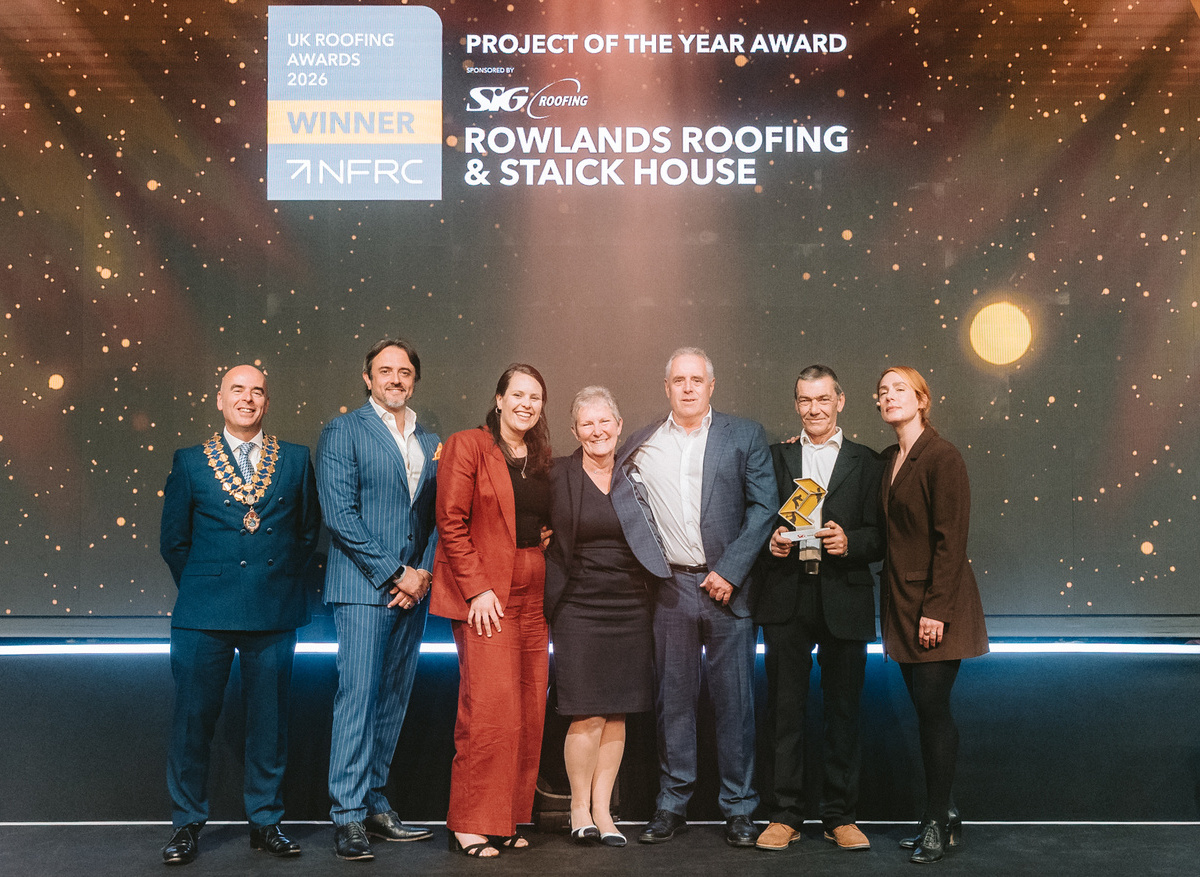
The team collecting their Project of the Year trophy
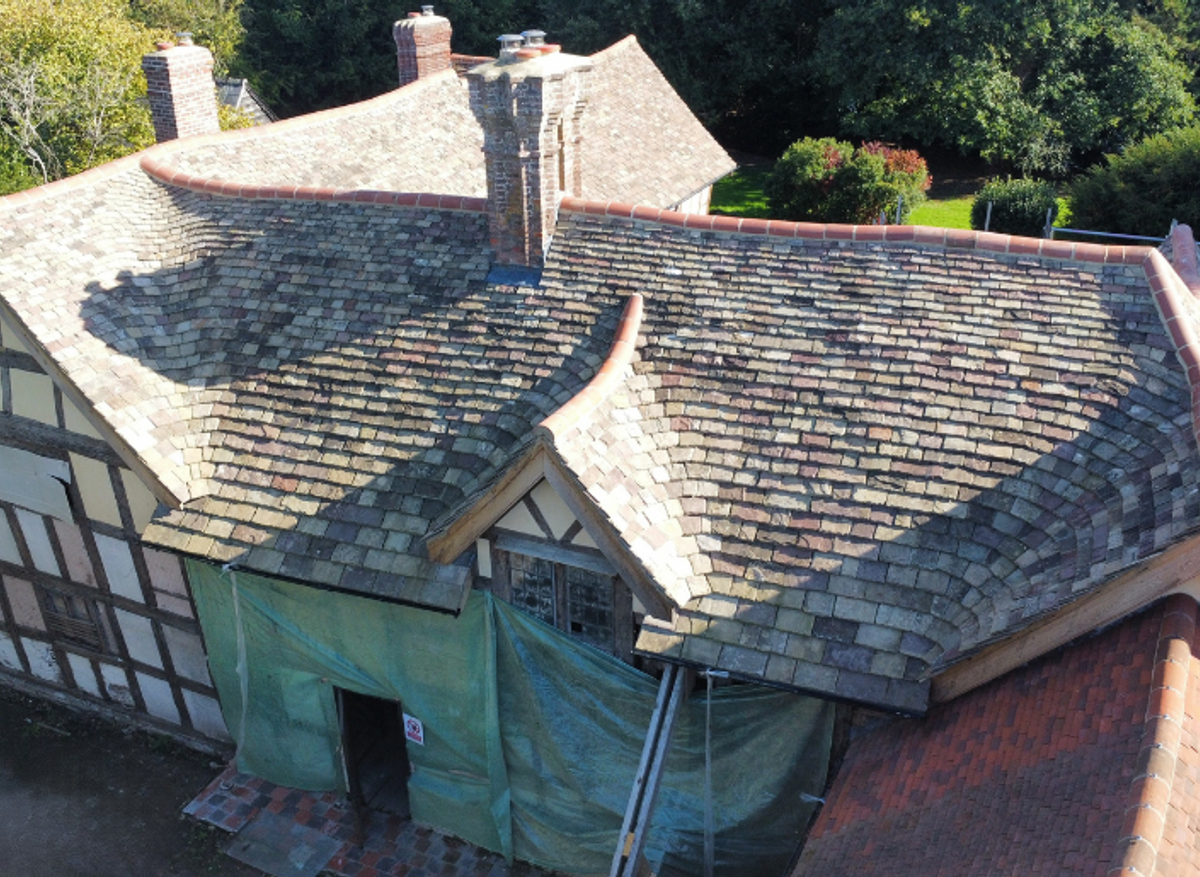
Staick House upon completion
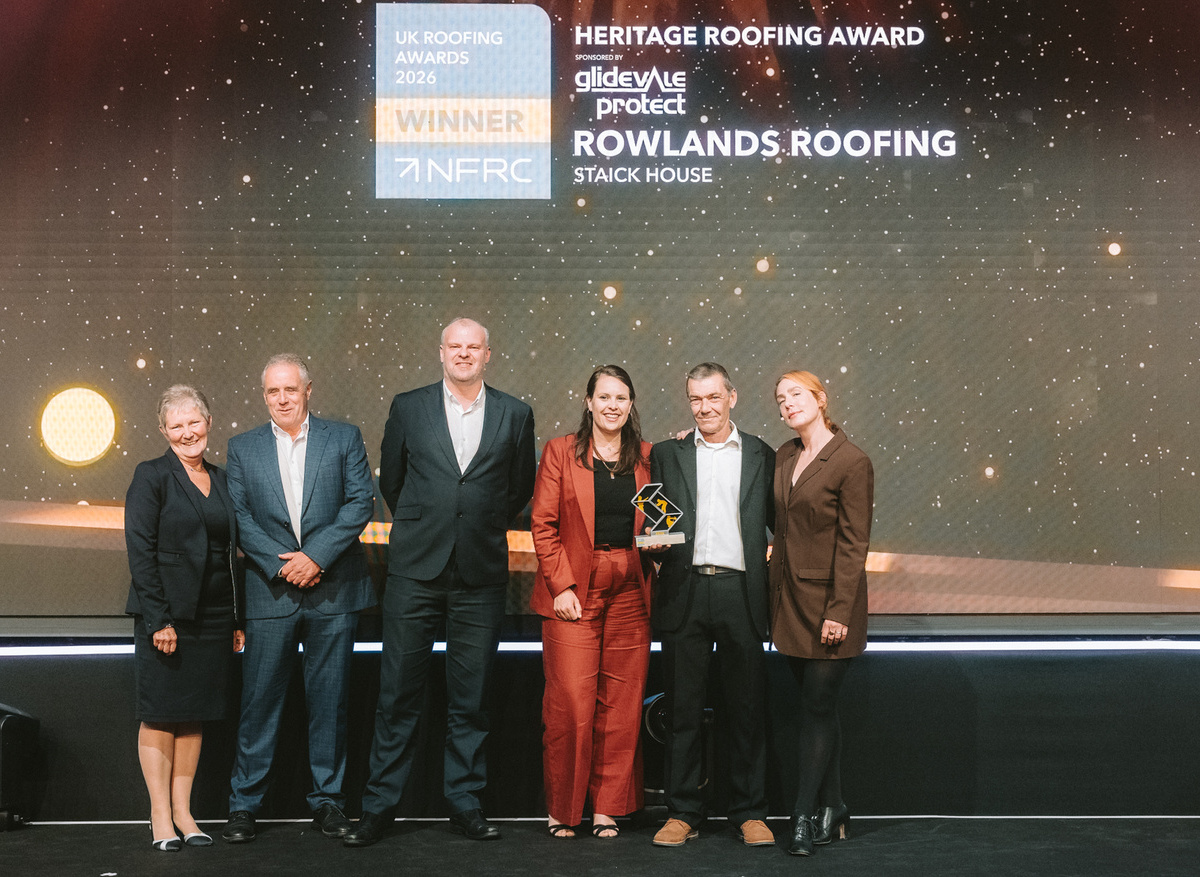
Staick House was recognised as Heritage Roofing Award winner of 2026
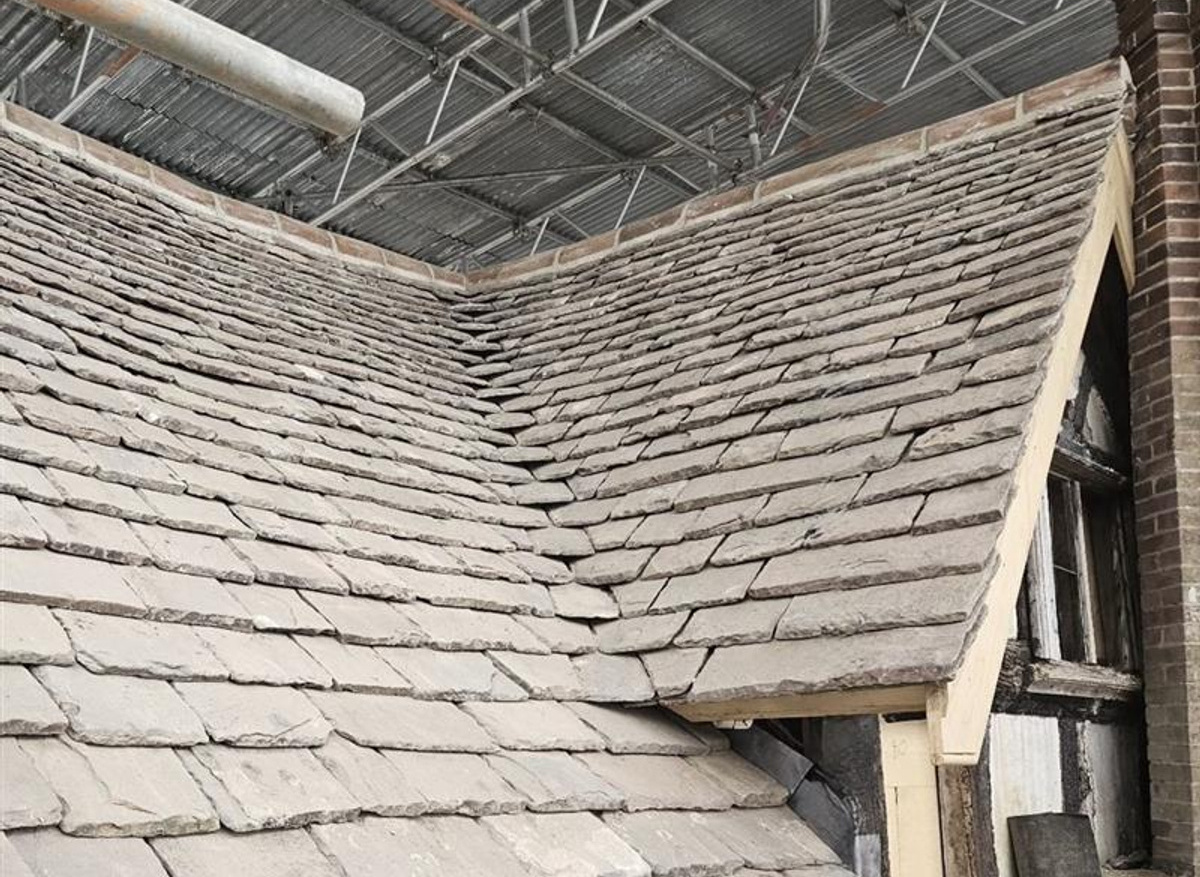
The roof required exceptional knowledge of heritage roofing
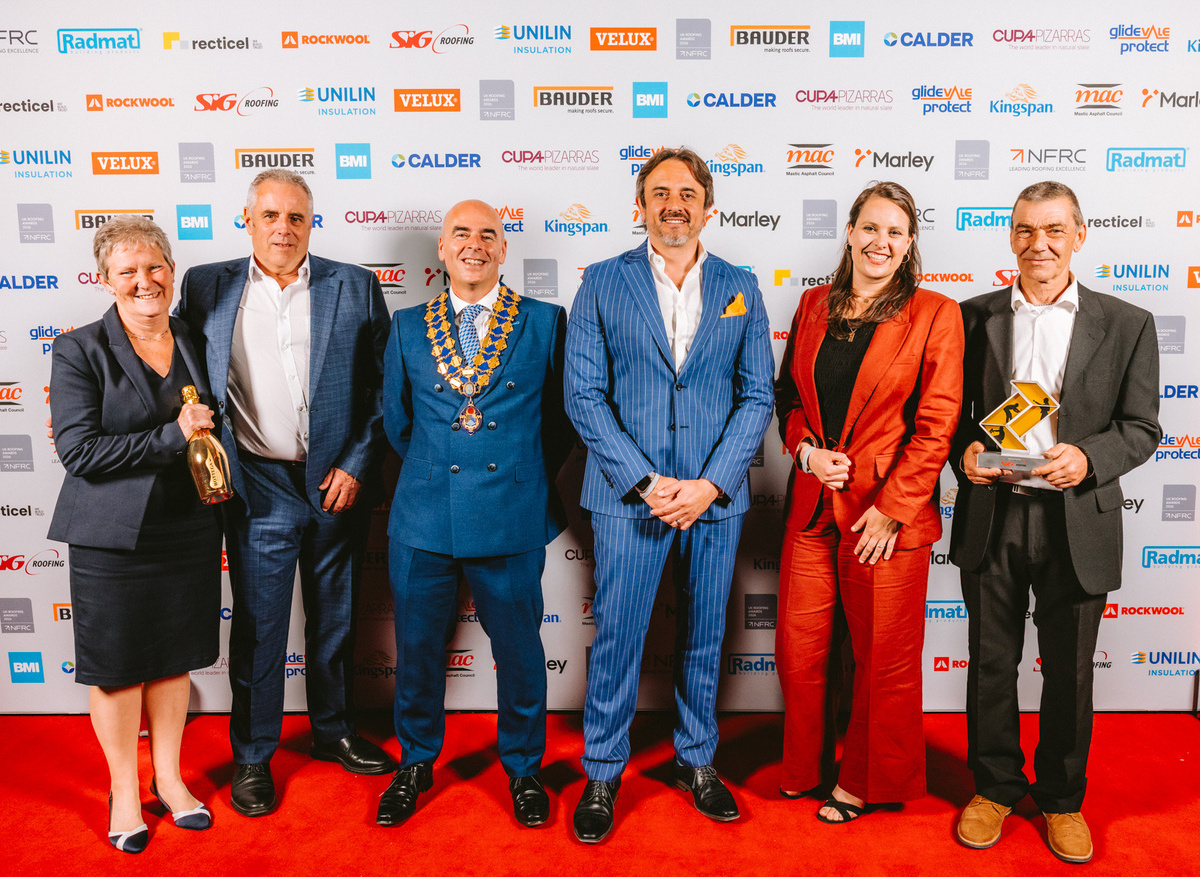
Enjoying a red carpet photo opportunity with NFRC President, Colin McCorquodale, and Managing Director of SIG, Chris Lodge
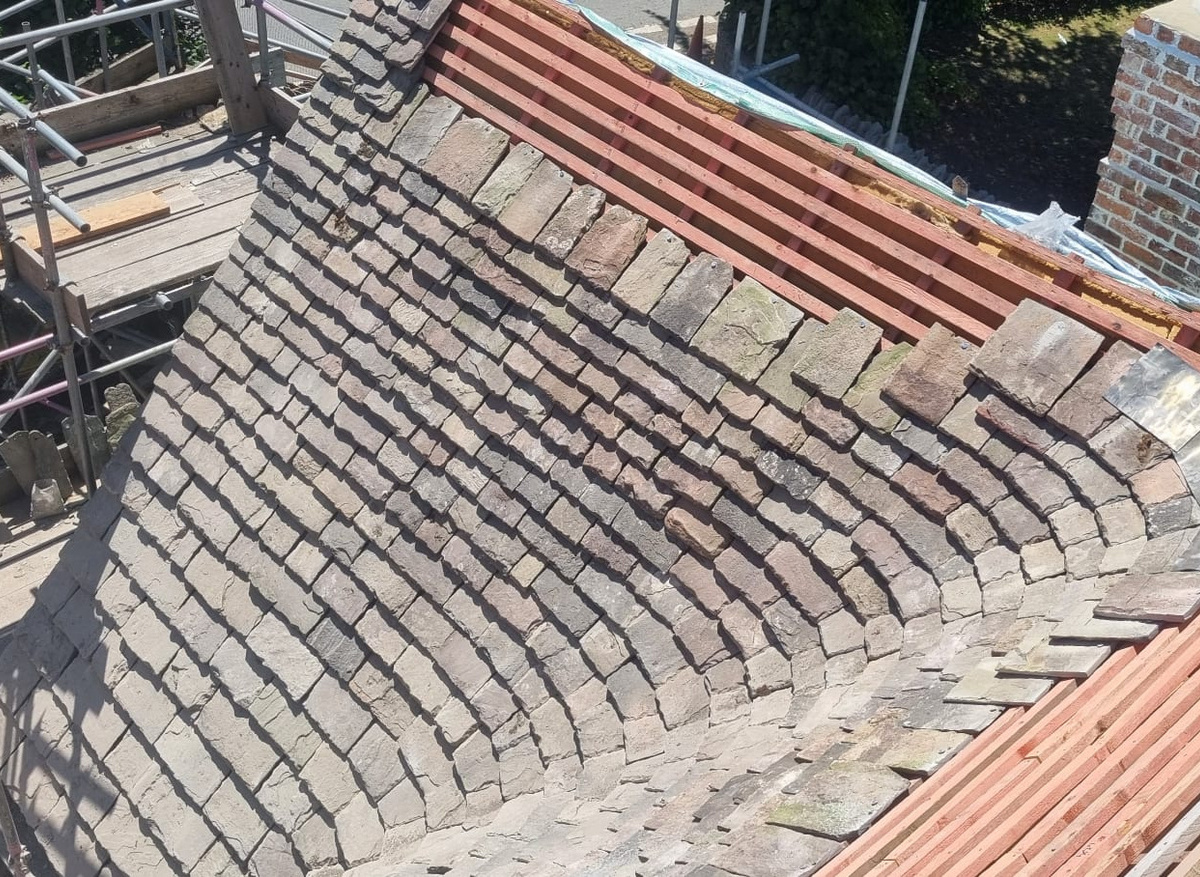
Maintaining the character of the traditional stone and conserving the building’s vernacular character was imperative.
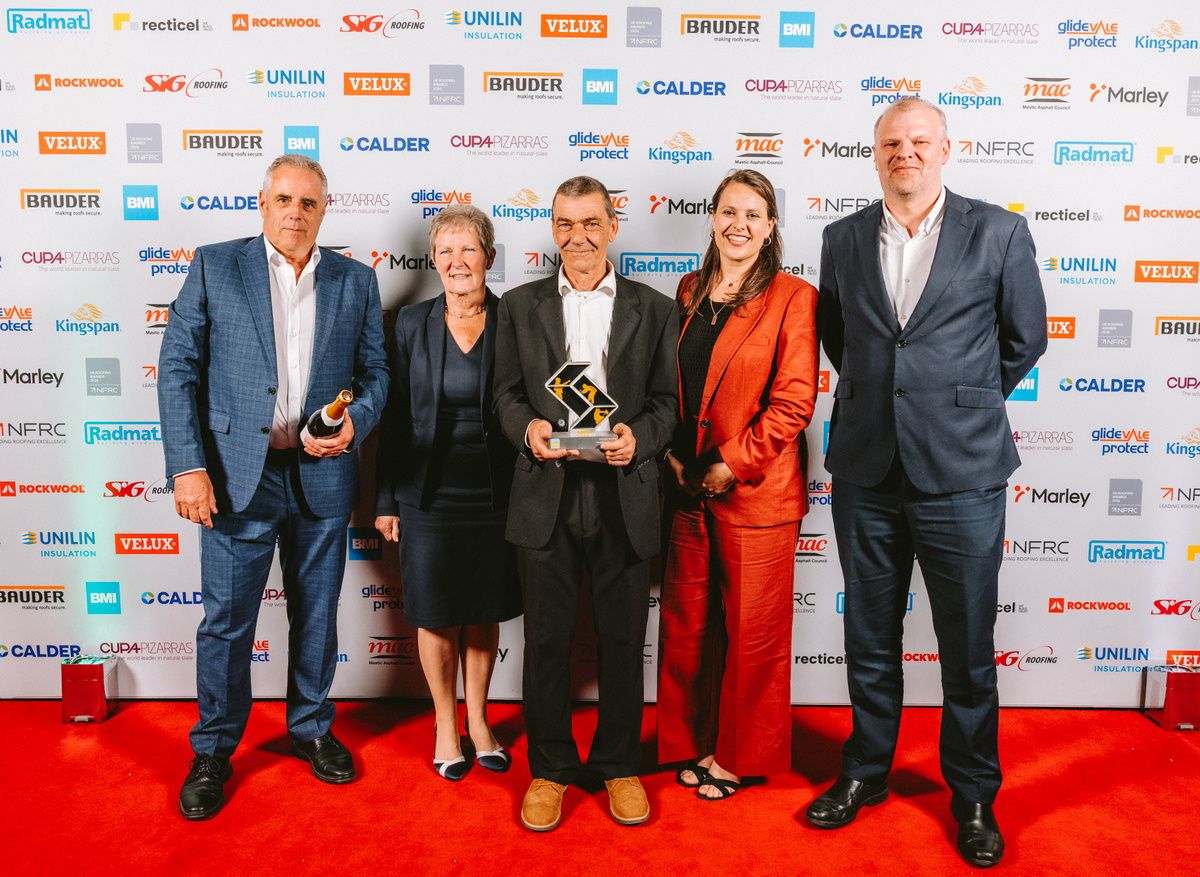
Celebrating the victory with John Mellor, Head of Marketing for Glidevale Protect