Ruth Scarrott, NFRC Head of Careers, explains how the Ambition Roofing programme is opening up practical routes into the trade.
A pilot programme in Stoke-on-Trent shows how combining hands-on training, local partnerships and direct employer engagement can open accessible pathways into the roofing industry.
Working with industry and government, the Ambition Roofing programme was formed because the roofing industry needs more practical, supported routes for people to enter the trade, and because too many potential recruits were still missing out on opportunities simply because they did not know how to get started.
The intention was not to overwhelm people with theory, but to help them build confidence, gain hands-on experience and understand the types of roles available
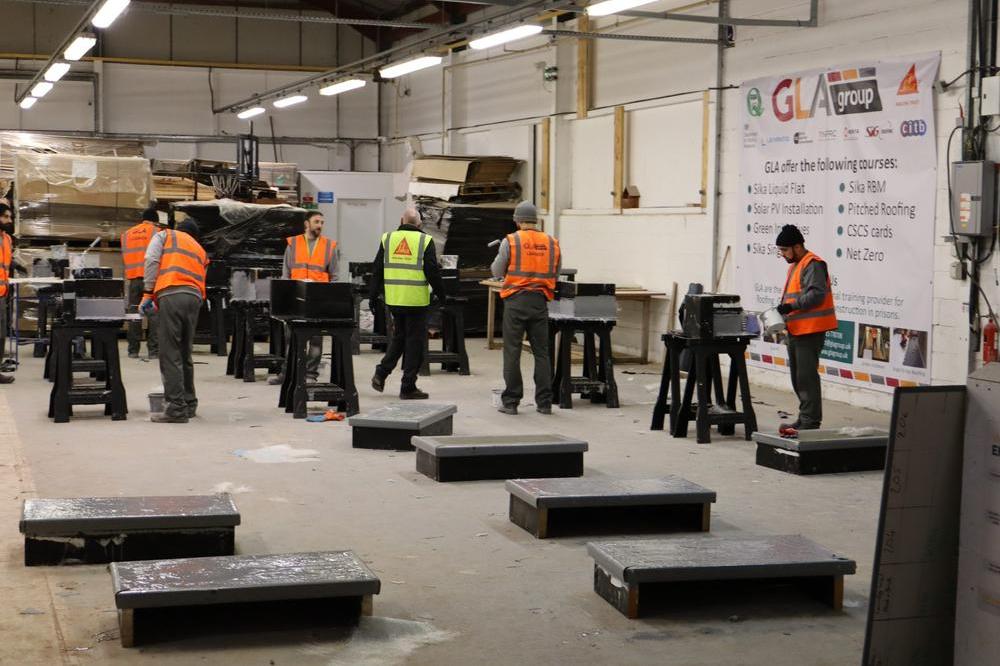
Above: image shows a previous workshop delivered by GLA.
The pilot brought together NFRC, the Department for Work and Pensions (DWP) and GLA Group to test a more joined-up approach connecting local people, training providers, Jobcentres and employers. It reflected the wider drive across construction to create alternative entry routes into the industry and to help more people move into sustainable work.
In Stoke-on-Trent, that approach took shape through an intensive five-day Liquid Applied Roofing course delivered by GLA Group at YMCA Stoke. The course was designed for a small cohort of up to 10 learners and focused on introducing local residents to roofing, balancing technical learning with employability support. The intention was not to overwhelm people with theory, but to help them build confidence, gain hands-on experience and understand the types of roles available across roofing and the wider supply chain.
The induction day helped set the tone for the week. It gave participants the chance to confirm attendance, understand expectations and prepare for the practical elements of the programme before training began two weeks later. For many learners on the course, this was an opportunity to take a first step into a sector that can sometimes feel closed off from people without experience or industry contacts.
Employers were invited in during the week to see learners in action, ask questions and begin informal conversations about next steps
What we delivered in Stoke-on-Trent
Across the five days, learners completed a structured mix of written modules and practical installation tasks covering the products, tools and techniques used in liquid applied roofing systems. The course was delivered by experienced roofing professional Tom Bird, whose approach combined technical knowledge with practical insight from site. Learners were introduced to product knowledge, surface preparation, safe working practices and step-by-step installation methods, but the programme also looked beyond one roofing discipline. Careers and employability support formed a key part of the week, helping learners understand that roofing offers a broad range of opportunities, not only in liquid systems, but also in pitched roofing, felt and single ply roofing, as well as sales, warehousing, distribution and delivery roles linked to the wider sector.
The pilot was also shaped around vacancies and conversations with local employers. Employers were invited in during the week to see learners in action, ask questions and begin informal conversations about next steps. That helped bridge the gap that often exists between training and employment. Rather than leaving learners to finish a course and then work out what came next on their own, the programme created opportunities for direct employer contact while confidence and momentum were high.
It showed the value of combining local delivery, practical learning and employer engagement in one offer
The pilot achieved a more connected way of working. It showed the value of combining local delivery, practical learning and employer engagement in one offer. Learners were able to build knowledge and confidence in a supportive setting, while employers could see potential early and engage with people who were already demonstrating commitment, punctuality and willingness to learn. For NFRC, that mattered because the sector needs routes in that are practical, visible and genuinely linked to jobs.
Local partnership with YMCA Stoke provided a setting that worked for both classroom learning and practical activity, and the wider collaboration between partners helped ensure the course was rooted in local need rather than delivered as a one-off exercise.
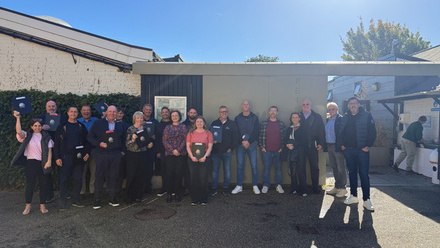
NFRC also worked closely with local members JPR Roofing and Alsager Roofing Cheshire who attended to meet candidates. Employer involvement was exactly what the pilot was intended to encourage: early connection, better understanding on both sides, and a clearer pathway from training into work.
If we want to bring more people into roofing and keep them there, we need to keep building routes that are visible, supportive and connected to real opportunities
The ask for employers
This pilot demonstrated the value in creating simple, practical ways for people to experience roofing with the right support around them. We saw what could happen when employers, local partners and training providers worked together with a shared purpose. My ask to employers was straightforward: recruit from this cohort, or get in touch if you would like to explore an intake in your area. If we want to bring more people into roofing and keep them there, we need to keep building routes that are visible, supportive and connected to real opportunities. That was the purpose of Ambition Roofing, and this pilot showed what could be achieved when that purpose was put into practice.
NFRC has launched the third campaign as part of its Health, Safety and Wellbeing strategy. Titled “Weather the Storm”, the campaign is dedicated to making wellbeing part and parcel of Health and Safety.